Manchester City’s 3-0 win at Anfield has been followed by another controversy, this time involving the Premier League’s broadcasting rules.
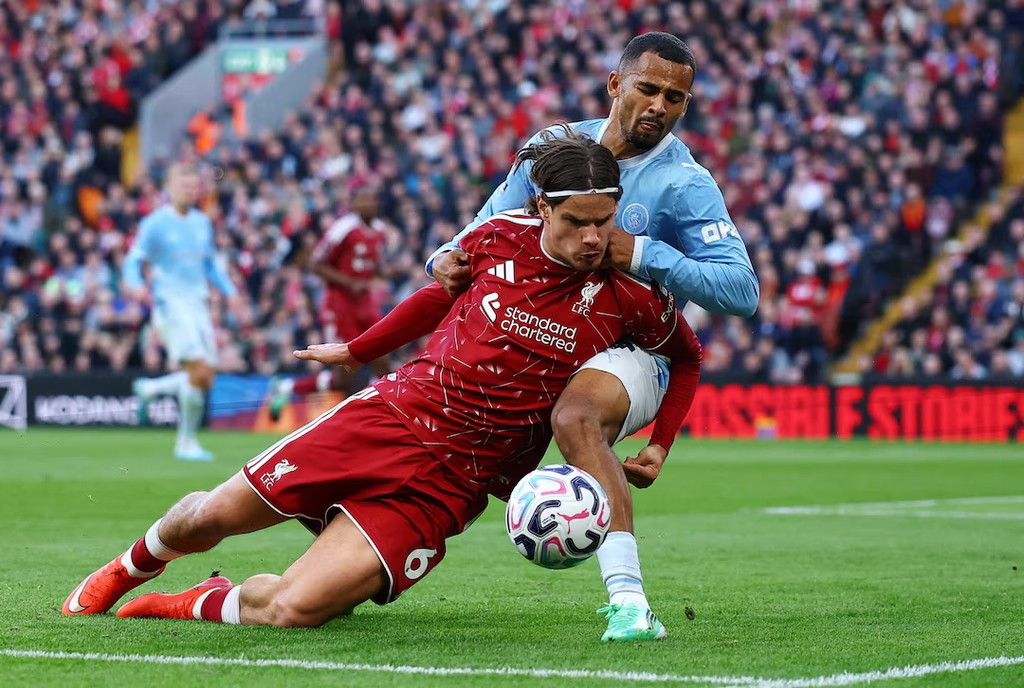
Manchester City enjoyed a memorable afternoon at Anfield on Sunday, 11 October, beating Liverpool 3-0. However, the result was quickly followed by questions over the club’s post-match media obligations.
According to reports, City failed to make manager Enzo Maresca available for interviews with radio broadcasters after the match, despite speaking to television media and attending the post-match press conference.
The incident has raised fresh questions about the club’s compliance with Premier League regulations at a time when it is already facing intense scrutiny over its financial affairs.
What happened after the Liverpool match?
City secured an impressive away victory against Liverpool, with Erling Haaland, Jérémy Doku and Rayan Cherki scoring the goals.
Liverpool’s afternoon became more difficult after Ryan Gravenberch was sent off in the second half. City took advantage of their numerical superiority to complete a convincing win.
But the football was not the only talking point.
A report by talkSPORT claimed that Manchester City did not make Maresca available to radio broadcasters after the final whistle. The manager had reportedly fulfilled other media duties, making his absence from the radio interviews a subject of discussion.
No public explanation for the reported omission was provided in the report.
Which Premier League rule is involved?
The allegation centres on Rule K.207 of the Premier League’s broadcasting regulations.
The rule sets out post-match interview obligations for clubs, including making the manager and at least one prominent player available to relevant radio broadcasters.
These requirements help ensure that broadcasters with the appropriate rights can provide supporters with immediate reaction from managers and players after matches.
If a club fails to meet those obligations without an agreed exemption or other valid explanation, it could face scrutiny from the league.
The relevant provisions can be found in Section K of the Premier League handbook.
Why does this matter for Manchester City?
The timing of the allegation is particularly significant.
City travelled to Anfield amid considerable attention surrounding the Premier League’s financial-rule proceedings against the club. The team’s victory was therefore about more than three points, with the result providing a strong response on the pitch.
The reported broadcasting issue has now created another talking point, although it is important not to confuse an alleged media-regulation breach with the separate financial case.
The two matters involve different rules and processes. Any action over the broadcasting allegation would depend on the relevant facts and the Premier League’s assessment.
Has Manchester City been punished?
At the time of writing, no official Premier League announcement confirming a punishment for this specific alleged broadcasting breach has been verified.
That distinction matters. A media report that a club has failed to meet an obligation is not the same as a formal disciplinary finding.
Manchester City has also not been publicly confirmed to have received a sanction over this particular incident.
The final word
Manchester City left Anfield with three goals, three points and plenty to celebrate. Yet the reported failure to make Maresca available to radio broadcasters has added another layer to an already eventful period for the club.
Whether the incident leads to formal action remains to be established.
For now, the key question is straightforward: was this a breach of the Premier League’s broadcasting rules, or is there an explanation that has not yet been made public?
Until the league clarifies the matter, the allegation should remain an allegation rather than be treated as a confirmed offence.